Product added to cart!
View Cart
Rentabilisez votre toit et réduisez votre dépendance au réseau d'Hydro-Québec grâce à un système sur mesure.
Parler à un expertThe Electrical panel is the core of your residential electrical system. Often forgotten in a corner of the basement, it nevertheless plays an essential role on a daily basis. It distributes electricity throughout your home, powering your lights, sockets, and appliances, including your heating system.
Understanding how it works and the standards that govern it in Quebec is crucial to ensure the safety of your home. This article will guide you through everything you need to know about this vital component of your electrical installation.
The main role of your Electrical panel is to receive the Main power supply from your electricity supplier and to distribute it safely in different circuits. Each circuit serves a specific area or type of device in your home, such as power sockets of the kitchen or the lighting of the rooms.
This box centralizes the management of Electric current and ensures a stable diet where you need it. It is the cornerstone of your electrical installation. Let's see how it keeps you safe and what its essential components are.
Beyond simple distribution, the most important function of your Electrical panel is to ensure your safety. It serves as a safeguard against electrical overloads and short circuits, two of the main causes of fire risks of electrical origin. Each circuit is protected by a circuit breaker.
When a circuit requires more current than it is designed for, for example if too many devices are connected to the same power outlet, the circuit breaker corresponding is triggered. It instantly cuts off the power on this circuit, preventing the wires from overheating and potentially starting a fire.
In the event of a problem, simply unplug the appliance in question and reset the circuit breaker to restore the electricity. It is a simple but effective security measure that protects both your belongings and the occupants of the home.
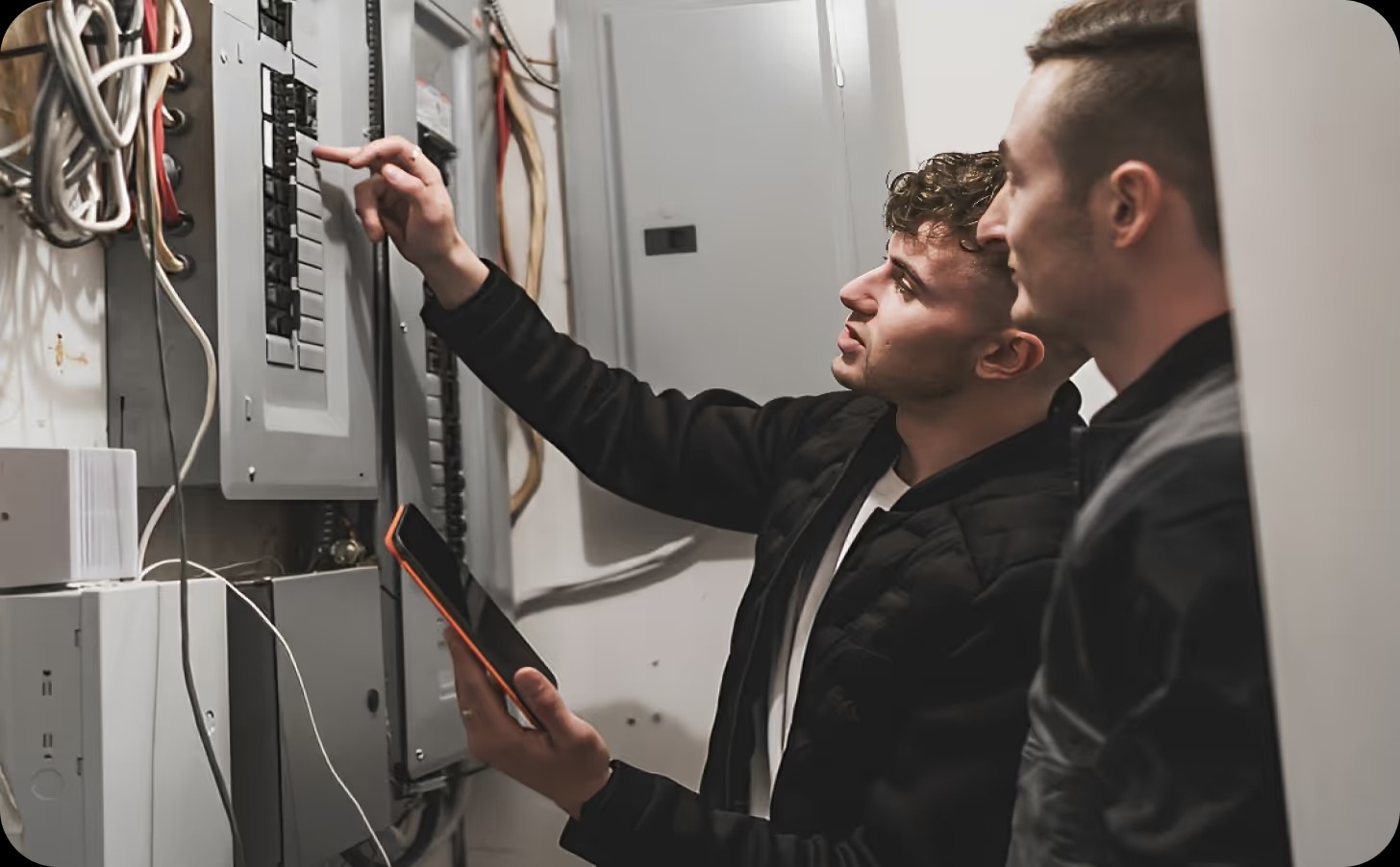
To fully understand how your panel works, it's helpful to know its main components. The set is housed in a metal housing, designed to protect internal elements and contain possible electric arcs.
The main circuit breaker is the most important, because it allows you to cut all the power supply of the house in a single gesture in case of emergency or for major work.
Here are the components found in most modern panels:
In Quebec, there are two main types of electrical panels in the residences: the fuse panels And the circuit breaker panels. The first is an older type of panel, often found in homes built before the 1970s.
Today, the circuit breaker panel is the norm for any new construction or renovation. This old fuse panel is gradually being replaced, as it no longer meets modern energy needs and current safety standards.
The fundamental difference between a fuse panel And a circuit breaker panel lies in how they protect the circuits. In an old panel, a fuse contains a metallic filament that melts when overloaded. This fuse must then be replaced by a new one.
The circuit breaker, for its part, is an electromechanical switch. In case of overload, it is triggered and goes into the “off” position. To restore power, simply turn it back on. This simplicity makes the new circuit breaker panel much more practical and safe, because it eliminates the risk of using a fuse of the wrong caliber, an error that increases fire risks.
| Characteristic | Fuse Panel | Circuit Breaker Panel |
| Operation | The fuse melts and must be replaced | The circuit breaker trips and can be reset |
| Safety | Less safe; risk of incorrect amperage | Very safe; no parts to replace |
| Convenience | Requires having spare fuses | Easy to reset |
| Modernity | Old panel, often inadequate today | New panel, current standard |
The Amperage Of your Electrical panel Determine the total amount of electricity that your home can use simultaneously. Choosing the right one panel size is essential to meet your current and future needs. An undersized panel causes frequent triggers.
For a small house, a 100 amp panel may suffice. However, the standard for new buildings today is 200 amps. This power is necessary to power energy-intensive devices such as central air conditioning, a spa or a electric vehicle charging station.
Assess your power needs with a professional. He will know how to calculate the electrical load of your home and recommend the ideal amperage. If you're planning on adding energy-intensive devices, opting for a more powerful panel now is a smart investment.

In Quebec, the installation and modification of an Electrical panel are subject to strict regulations. Any intervention must be in accordance with Quebec Construction Code, Chapter V — Electricity. Compliance with these rules is a legal obligation that aims to prevent accidents.
This regulation covers everything from where the panel is located to how the wires should be connected. An inspection by a recognized organization is often required after the work to ensure that the installation is safe and compliant.
The complete replacement of an Electrical panel necessarily requires an Electrical work permit. This permit must be obtained by a master electrician Next to the Quebec Building Authority (RBQ). It is a step that guarantees that the project will be carried out according to the rules of the art.
Once the work is finished, inspections are necessary. A certified inspector verifies that the installation complies with the Code. Hydro-Quebec requires that the installation be certified in conformity before connecting it to the network.
Calling on a professional assures you that these administrative procedures will be managed correctly. In addition, a compliant inspection report is often required by your home insurance company to validate your coverage in the event of a claim.
Understanding how electrical panels in Quebec is essential to ensure the safety of your electrical installation. Whether you are considering installing a new panel or replacing an old one, choosing the right type and the right one is crucial. Amperage while respecting standards.
Call on a certified master electrician at ERCO makes the process easier and gives you peace of mind. Our experts can assess your needs, ensure compliance with Quebec regulations and guarantee a safe installation.
If you want to know more about installing electrical panels or exploring our energy autonomy solutions such as generators, do not hesitate to contact us Contact for a free consultation.
.png)