Buy a standby generator and enjoy six (6) months without payment or interest!
Some conditions apply*
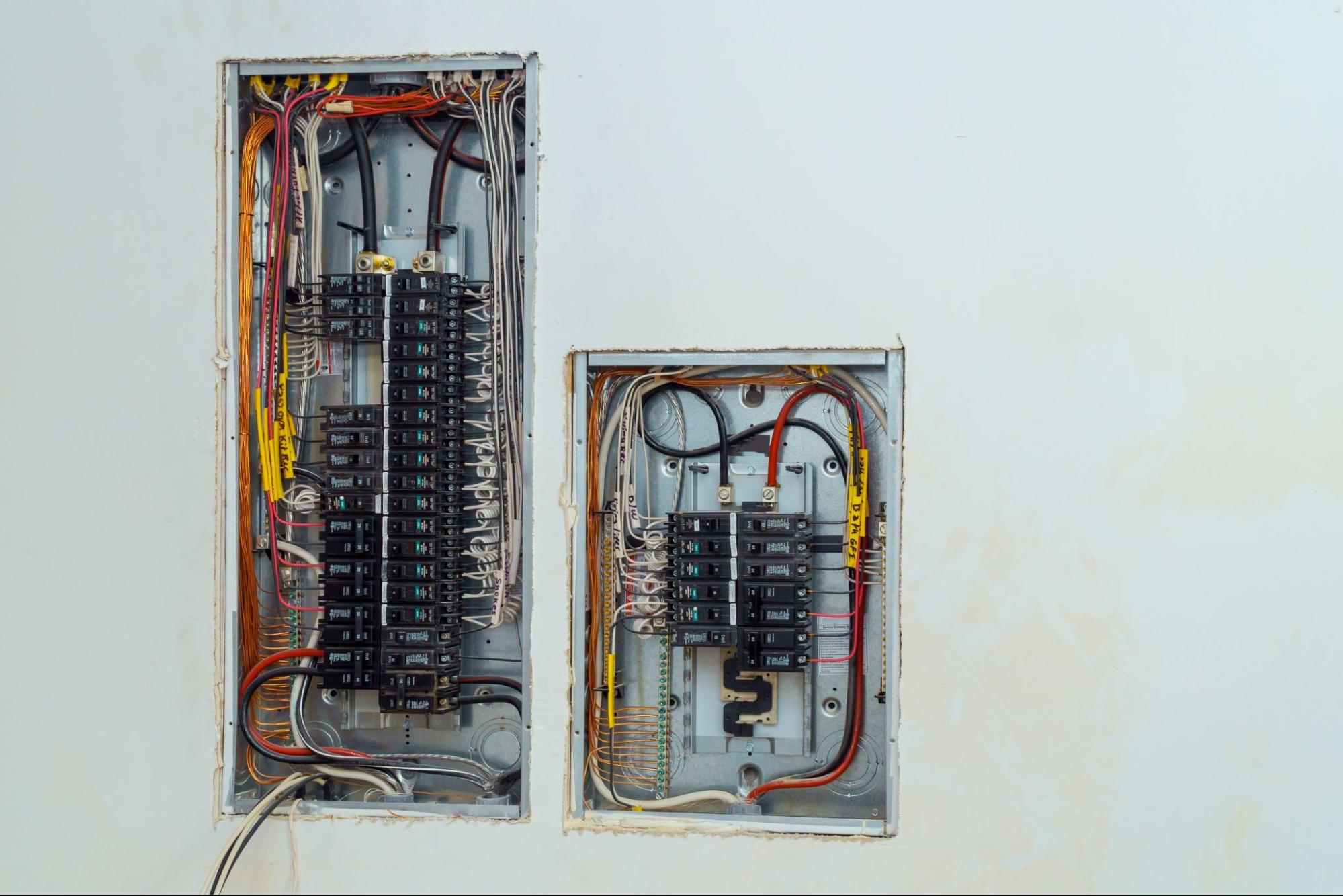
Your electrical panel truly represents The beating heart of your electrical system domestic. But do you really know the components that protect you on a daily basis?
Two key elements take care of your safety: the fuse and the circuit breaker. Although their final mission is the same — to turn off the power as soon as a problem arises — their mode of operation differs considerably.
Grasping this distinction becomes fundamental in order to guarantee the optimal protection of your home and all of your devices. This comprehensive guide will enlighten you on the specificities of each device, allowing you to finally see clearly in this essential technical field.
A distribution board, which everyone knows under the name of Electrical panel, serves as a central point to manage electricity in your home. It is precisely in this place that the main power supply from your supplier is divided into several distinct circuits. These circuits then carry the current to your sockets, your lighting and all of your electrical devices.
So what are the components that make up this nerve center? To guarantee the safe distribution of electricity, each panel is equipped with rigorously selected protection devices. These essential components, which must imperatively respect the current standards established by the Régie du Bâtiment du Québec, take the form of either circuit breakers or fuses. Their role? Interrupt the power instantly as soon as an anomaly occurs.
Let's now explore the role of each of these protective elements in detail.

The circuit breaker works like an automatic switch specially designed to protect the individual circuits of your electrical installation. Its main advantage lies in its reusability. Unlike a fuse, it does not require replacement after the power is turned off.
In the event of an overload or short circuit, the circuit breaker is automatically triggered. To restore the electricity, all you have to do is rearm manually once the problem is resolved. This ease of use makes it a preferred choice for Quebec owners.
There are several types of circuit breakers, each adapted to specific needs. RCDs, for example, offer protection against electric shock in humid areas like bathrooms. Operation is based on an ingenious electromechanical mechanism: when an overcurrent passes through the circuit breaker, an electromagnet or a bimetallic strip is activated, thus triggering a lever that opens the circuit.
This ability to be easily reset makes the circuit breaker a truly practical and safe solution for home use. You can easily identify which circuit caused the problem and, after resolving the cause of the overload, get the power back on without requiring immediate professional help.

The fuse represents an older protection device, but which remains effective in certain specific applications. Its operation is distinguished by its simplicity: it contains a small metallic filament designed to melt and break if the current flowing through it exceeds a safe level. This action immediately interrupts the circuit, preventing damage caused by overloads.
One of the main advantages of a fuse is its remarkable speed of action. In the event of a current surge, it melts almost instantly, providing excellent protection for highly sensitive electronic devices that could be damaged by the slightest surge of voltage. This is also why they are often found directly inside these delicate devices.
However, the big difference with the circuit breaker is that a fuse Only works once. After melting to cause a power outage, it must be replaced by a new one of the same caliber. This characteristic makes it less practical than a circuit breaker for household circuits that are subject to occasional overloads.
The fundamental difference between a fuse and a circuit breaker is essentially in their operation and durability. While a fuse literally sacrifices itself to protect a circuit, the circuit breaker acts more like a reusable guard that always stays at its post.
They are both effective protective devices, of course, but they are absolutely not interchangeable. Your choice between these two technologies will depend mainly on the intended application, the type of protection required and the level of convenience desired.
Knowing exactly what their characteristics are will help you better understand your home's electrical system. This understanding will also allow you to make truly informed decisions about your electrical safety.
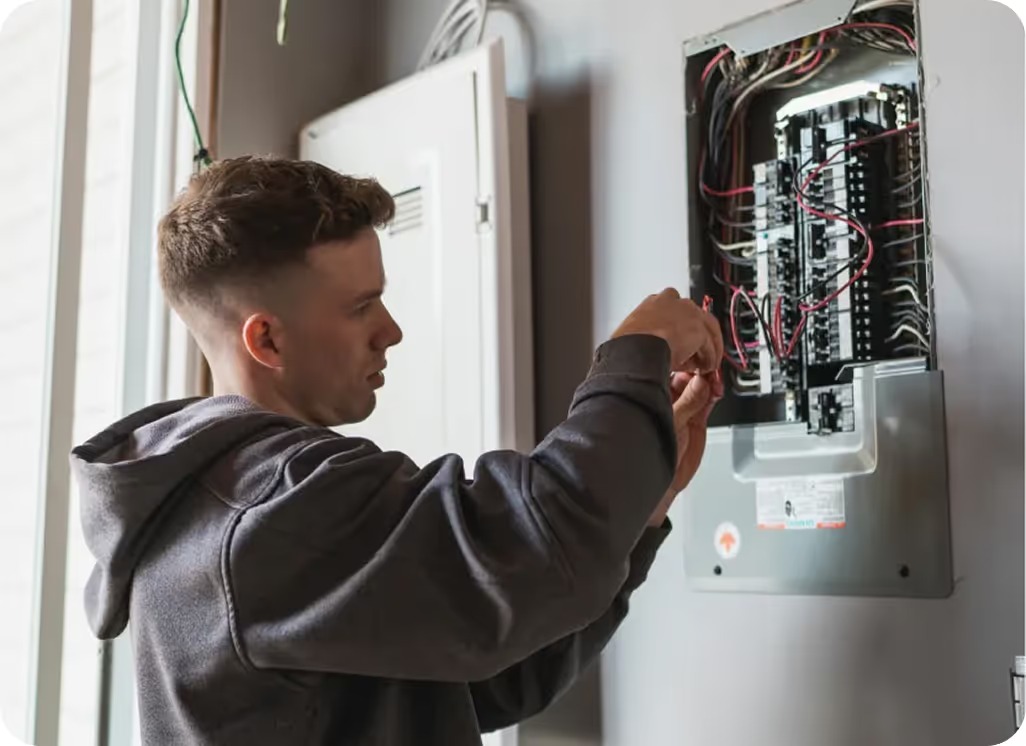
The fuse works according to the well-known principle of The Joule effect. It consists of a housing, usually made of glass or ceramic, that contains a precisely calibrated conducting filament. In the event of overcurrent, the heat generated by the excessive current melts this delicate filament.
The cut turns out clear and definitive, thus guaranteeing the complete interruption of the circuit until the fuse is replaced. This mechanism, although remarkably simple, is extremely rapid in its action. It is ideal for protect sensitive electronic components that do not tolerate overloads, even for a very short period of time.
Its single-use nature constitutes both its protective force and its main constraint. Indeed, you should always have spare fuses at hand, which can become restrictive in the long run.
Here is a summary of its advantages and disadvantages to better understand its usefulness:
Advantages:
Disadvantages:
The circuit breaker operates on a different principle, using a sophisticated electromechanical mechanism. Inside, an electromagnet or bimetallic strip reacts precisely to overcurrent. This reaction triggers an internal mechanism that tilts a lever, or joystick, to the “off” position, thus cutting off the current flow.
The biggest advantage of this system is its remarkable practicality. To restore electricity, no parts need to be replaced. Simply manually return the lever to the “on” position once the cause of the overload has been corrected. This simple rearming makes the circuit breaker particularly suitable for residential use in Quebec.
In addition, there are several types of circuit breakers designed for specific protections. Residual current circuit breakers (DDFTs), for example, effectively prevent electric shock in risk areas. They are safer because they eliminate the risk of installing the wrong fuse — a mistake that can be dangerous.
Although their initial cost be higher than that of fuses, their exceptional durability and ease of use make them a wise long-term investment for your home.
In conclusion, understanding fuses and circuit breakers becomes essential to ensure the optimal safety of your residential electrical panel. These components play truly crucial roles in protecting your home from dangerous overloads and devastating short circuits.
By knowing exactly their differences and their distinct characteristics, you can better assess your real needs by Electrical matter. This understanding also allows you to make truly informed decisions about maintaining or replacing your electrical system.
Never forget that electrical safety should always remain a top priority in your home. If you have specific questions or want to know more about upgrading your electrical system, don't hesitate to contact us. Our certified master electricians will offer you advice adapted to your particular situation and to the specific needs of your electrical installation in Quebec.